
The Importance of Mental Health Training for a Healthier Workplace- How to Enroll
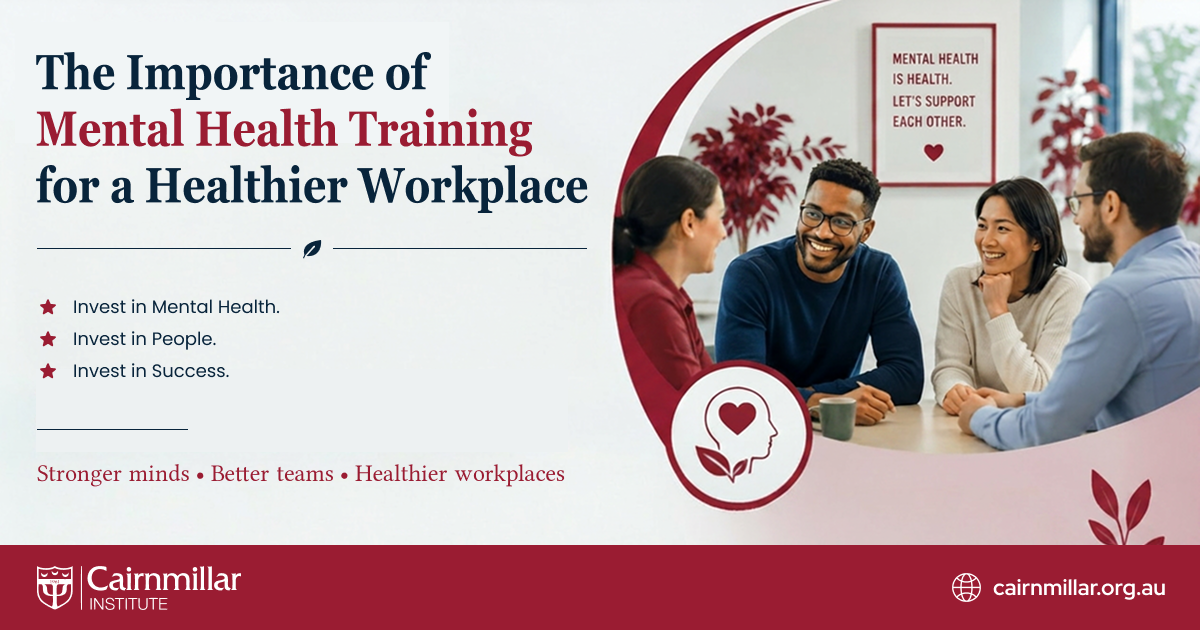
Australian workplaces are burning out. Stress, anxiety, and burnout are costing companies productivity, talent, and team cohesion. The fix? Mental health training that equips your team to spot distress early and respond with confidence, Enroll Now.
Creating a workplace where people feel supported requires more than good intentions. It requires informed leadership, practical capability and a shared language around mental health. Evidence-based training equips teams with the knowledge and confidence to recognise distress early, respond appropriately and contribute to a culture where help-seeking is normalised.
Key Takeaways
- Mental health training builds awareness and reduces stigma across teams
- Mental health literacy helps employees recognise early signs of distress in themselves and others
- Trained workplaces are better equipped to identify concerns before they escalate
- Psychological safety strengthens trust, inclusion and open communication
- Investing in workplace mental health training supports long-term organisational resilience
Why Mental Health Training Matters in Australian Workplaces
Mental health directly affects how people think, communicate and perform at work. When employees are struggling — with stress, anxiety, burnout or other challenges — the impact is felt across teams and organisations. Absenteeism rises, productivity falls and workplace relationships become strained.
Addressing mental health in the workplace is not about replacing clinical support. It is about building a culture where people feel safe to speak up, where managers are equipped to respond with empathy, and where organisations understand their responsibilities around psychological health and safety.
For many employees, a colleague or manager is the first person who notices that something is wrong. Without the right training, well-meaning responses can inadvertently cause harm. With the right skills, those same individuals can provide meaningful first-response support and connect people with appropriate help.
Building Mental Health Literacy Across Teams
Mental health literacy refers to a person’s ability to recognise, understand and respond to mental health challenges — both in themselves and in others. Workplaces with higher levels of mental health literacy are better equipped to reduce stigma, support help-seeking behaviours and create environments where employees feel genuinely valued.
Building this literacy requires structured, evidence-based learning. Programs that combine knowledge with practical skills — such as how to have a supportive conversation, how to recognise warning signs and how to refer someone to appropriate care — produce more confident and capable workplaces.
Cairnmillar Institute has been delivering evidence-based mental health education across Australia for over 60 years. Drawing on integrated expertise across education, research and clinical practice, Cairnmillar’s professional development programs are designed to build practical capability — not just theoretical awareness.
Supporting Psychological Safety and Workplace Culture
A psychologically safe workplace is one where people feel comfortable expressing concerns, asking for help and raising issues without fear of negative consequences. It is built on trust, respect and inclusion — and it does not happen by accident.
Training plays a direct role in building psychological safety. When managers and team members understand mental health, communicate more openly and respond consistently and compassionately to distress, the broader workplace culture shifts. Employees are more likely to seek support early when they trust that it will be well received.
Cairnmillar’s Building a Psychologically Healthy and Safe Workplace workshop addresses employer obligations in this area directly, with a particular focus on providing practical guidance to small and medium-sized businesses. The workshop helps organisations understand their responsibilities, build confidence in managing mental health conversations and implement sustainable practices that protect both employees and the organisation.
The Role of Leaders in Workplace Mental Health
Managers and team leaders play a critical role in workplace mental health — often more than they realise. Research consistently shows that the relationship between an employee and their direct manager is one of the strongest predictors of wellbeing at work. When leaders are equipped with the right skills, they can create the conditions for early intervention before challenges escalate.
Effective leadership in this context does not mean becoming a clinician. It means knowing how to have a supportive conversation, understanding when and how to refer someone to professional support, and modelling the kind of open, respectful communication that normalises mental health discussions.
Cairnmillar’s professional development programs for workplace leaders cover applied skills in mental health awareness, psychological safety and the practical aspects of supporting teams through difficulty — grounded in decades of clinical and educational expertise.
Why Evidence-Based Training Makes a Difference
Not all mental health training is created equal. Programs developed without clinical grounding or ongoing research input may provide general information but fail to build the specific capabilities that workplaces need.
Cairnmillar Institute’s approach to workforce development is built on what it calls the Triple Helix Model — the integration of education, research and clinical practice. This means the training programs Cairnmillar delivers are not developed in isolation from real-world practice. They are informed by what actually works in clinical settings, tested through research and refined through decades of educational delivery.
This integration produces training that is both practically useful and professionally credible — qualities that matter to organisations making decisions about workforce development investment.
Mental Health Training as a Long-Term Investment
Mental health training is not a one-off compliance exercise. Its value grows over time as teams build shared language, confidence and capability. Organisations that commit to ongoing education in this area build a workforce that is more resilient, more connected and better prepared to navigate the pressures of modern working life.
The long-term benefits extend beyond individual wellbeing. Workplaces that prioritise mental health literacy and psychological safety report stronger team cohesion, more effective communication and greater capacity to manage change. These are not soft outcomes — they are directly linked to organisational sustainability and performance.
Expert Insight: Creating Sustainable Workplace Wellbeing
Cairnmillar Institute brings together over 60 years of expertise in mental health education, clinical practice and research. As a not-for-profit organisation and registered health promotion charity, Cairnmillar’s mission extends beyond individual training programs — it is about building long-term capability across the Australian mental health workforce and the broader community.
Sustainable workplace wellbeing is not achieved through a single workshop. It requires a commitment to continuous learning, leadership capability and an organisational culture that treats mental health as a core priority. Cairnmillar’s professional development programs are designed with this in mind — building practical skills that can be applied immediately, and supporting organisations to develop the ongoing capability they need to create genuinely healthy workplaces.
From short professional development workshops to comprehensive workforce training and Employee Assistance Programs, Cairnmillar’s range of services supports organisations at every stage of their mental health journey.
Conclusion
Mental health in the workplace is no longer a peripheral concern — it is central to how organisations function, retain talent and deliver outcomes. Investing in mental health training equips employees and leaders with the skills to recognise, respond and refer appropriately, and contributes to a culture where wellbeing is genuinely supported.
The evidence is clear that early intervention, mental health literacy and psychological safety produce tangible benefits — for individuals and for organisations as a whole. Building these capabilities requires structured, evidence-based education delivered by experienced practitioners.
For organisations looking to strengthen their approach to workplace mental health, exploring professional mental health education through an experienced and trusted provider is a practical and meaningful first step. To find out more about Cairnmillar Institute’s workplace training programs, visit cairnmillar.org.au or call 1800 391 393.
Frequently Asked Questions
Q: What is mental health training for the workplace?
Mental health training for the workplace is structured, evidence-based education that equips employees, managers and leaders with the skills to recognise signs of mental health challenges, respond appropriately and support help-seeking behaviours. It builds mental health literacy across teams and contributes to psychologically safe workplace cultures. Cairnmillar Institute has been delivering workplace mental health training programs across Australia for over 60 years.
Q: What workplace mental health training does Cairnmillar offer?
Cairnmillar Institute offers a range of workplace mental health training programs for organisations across Australia. These include Mental Health First Aid (MHFA), Applied Suicide Intervention Skills Training (ASIST), Awareness of Vicarious Trauma, and Core Counselling Skills. Programs are available online, in-person at the Hawthorn East campus, or on-site for organisations with groups of 10 or more participants.
Q: Why is mental health awareness training important for employees?
Mental health awareness training helps employees recognise early signs of distress in themselves and others, reduces stigma around mental health conversations, and builds confidence in responding appropriately. Workplaces where employees have mental health awareness training are better equipped to support each other, seek help earlier and contribute to a culture where wellbeing is genuinely prioritised.
Q: What is psychological safety at work and how does training help?
Psychological safety refers to a workplace environment where people feel safe to speak up, ask for help and raise concerns without fear of negative consequences. Mental health training contributes directly to psychological safety by equipping managers and team members with the skills to communicate openly, respond consistently and model the kind of respectful behaviour that makes others feel valued and supported.
Q: Can Cairnmillar deliver mental health training on-site for our organisation?
Yes. For organisations with groups of 10 or more participants, Cairnmillar can deliver select workplace mental health training programs on-site or online directly for your team. To discuss your organisation’s needs, contact the Professional Development team at Cairnmillar Institute on 1800 391 393 or visit cairnmillar.org.au/partner-with-us/organisational-services/professional-development-and-training/.
Q: Does Cairnmillar offer Employee Assistance Programs for workplaces?
Yes. Cairnmillar Institute’s clinic provides Employee Assistance Programs (EAP) for organisations across Melbourne. EAP services include short-term counselling for employees delivered by professional psychologists and counsellors, as well as organisational services such as staff wellbeing conversations, supervision, coaching, team building, debriefing and training. Cairnmillar is currently accepting new EAP agreements. Contact the clinic team on 1800 391 393 to discuss your organisation’s requirements.