
Graduate Psychology Internship Program (G-PIP): 600 Internships Now Available Across Australia
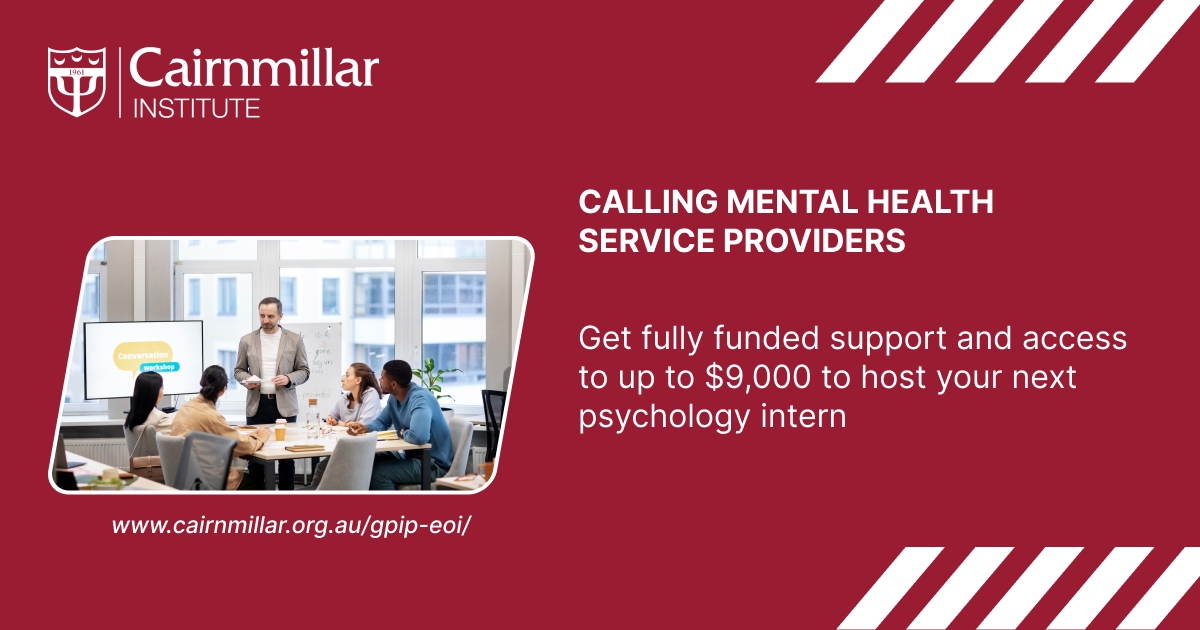
Australia faces a critical and growing need for expanded mental health services alongside an ongoing psychology workforce shortage. The Graduate Psychology Internship Program (G-PIP), delivered by Cairnmillar Institute, is a federally funded initiative that supports provisional psychologists undertaking the 5+1 internship pathway — and it has just expanded significantly.
Under a new three-year federal grant, the G-PIP program will now support up to 600 internships nationally, building on the success of its initial rollout and Cairnmillar’s years of experience delivering high-quality psychology training. The expansion increases access to training opportunities for provisional psychologists, strengthens Australia’s mental health workforce, and continues to prioritise communities where need is greatest.
Expressions of interest are now open for interns and host organisations.
Key Takeaways
- G-PIP supports provisional psychologists undertaking the 5+1 internship pathway to general registration
- The expanded program will support up to 600 internships nationally under a new three-year federal grant
- Total incentive value per intern is up to $12,614
- Approximately 50% of internships will be allocated to priority areas including First Nations communities, CALD communities and regional, rural and remote locations
- Expressions of interest are now open for both provisional psychologists and host organisations
- This program is not available to international students
What Is the Graduate Psychology Internship Program (G-PIP)?
The Graduate Psychology Internship Program (G-PIP) is a federally funded initiative delivered by Cairnmillar Institute that supports provisional psychologists undertaking the 5+1 internship pathway. The program aims to strengthen the national psychology workforce, particularly in priority mental health areas and community settings.
To be eligible, applicants must have completed an APAC-accredited fifth-year psychology program and be eligible for provisional registration with the Psychology Board of Australia. This program is not available to international students.
The G-PIP program benefits both interns and host organisations — offering financial incentives, supervision support and access to professional development resources.
Benefits for Provisional Psychologists (Interns)
The expanded G-PIP program provides substantial support for provisional psychologists entering the internship pathway. Benefits include:
A principal supervision subsidy of up to $6,000 pro rata, group supervision of 30 hours provided at no cost by Cairnmillar Institute, and 60 hours of Education and Training Activities (ETA) delivered online and self-paced at no cost by Cairnmillar Institute. Group and individual supervision of up to 80 hours total is available across the program.
In addition, interns relocating to regional, rural or remote areas classified as MMM3–7 may be eligible for rental relief of up to $14,400 per year — helping reduce financial barriers and support workforce distribution in high-need locations.
Cairnmillar Institute also supports interns by assisting them in identifying suitable placement opportunities across its network of host organisations.
The total value of benefits available per intern is up to $12,614.
Benefits for Host Organisations
Host organisations are central to the success of the G-PIP program and receive a range of benefits to support their participation.
Eligible organisations can access onboarding incentive payments of up to $3,000 per intern, direct access to a pool of provisional psychologists seeking internship placements, Education and Training Activities (ETA) provided for interns during the internship, assistance with intern onboarding and meeting supervision requirements, and opportunities to promote internship roles to suitable candidates.
Cairnmillar’s work with external organisations is also supported by its Partnership and Collaboration Policy, which provides further information about the Institute’s approach to partnerships and collaborative arrangements.
Organisations in priority areas including First Nations communities, Culturally and Linguistically Diverse (CALD) communities, and regional, rural or remote locations (MMM3–7) may be further prioritised for incentive payments.
Participating organisations retain full control over selecting interns, ensuring alignment with their service delivery needs.
Who Can Host Interns?
Mental health service providers including private practices, community health services, non-government organisations, clinics and hospital teams that can offer appropriate supervision and clinical experience are eligible to host interns through G-PIP.
The program supports a range of service types including community-funded services (state and federal) and child and family services — in addition to priority area organisations.
Support Provided Across the Program
G-PIP is designed as a collaborative model supporting interns, host organisations and supervisors.
For provisional psychologists, the program provides free 60-hour online ETA, group and individual supervision of up to 80 hours, potential rental relief for those relocating to MMM3–7 areas, and support in identifying placement opportunities.
For host organisations, the program provides ETA for interns during the internship period, onboarding and supervision support, incentive payments for priority area placements, and assistance advertising internship opportunities.
For supervisors, supervisee matching is available to connect supervisors with suitable provisional psychologists.
How to Express Interest
Expressions of interest are now open for the expanded G-PIP program.
Provisional psychologists seeking internship opportunities through G-PIP can register interest via the G-PIP Expression of Interest form on the Cairnmillar website. Cairnmillar will assist in identifying suitable placement opportunities across its host organisation network.
Host organisations interested in hosting interns can register their interest via the EOI form, supplying key contact and organisational details including AHPRA registration information. Completing an EOI begins the process of connecting with Cairnmillar’s program team to discuss eligibility, placement opportunities, supervision support and next steps.
Visit the Graduate Psychology Internship Program page at cairnmillar.org.au for full program details and to submit your expression of interest.
Conclusion
The expansion of the G-PIP program to 600 internships nationally represents a significant step forward in addressing workforce shortages in the Australian psychology sector. With a new three-year federal grant, increased internship numbers, enhanced benefits for interns and host organisations, and continued focus on priority communities, G-PIP is one of the most substantive workforce development initiatives in Australian psychology right now.
Whether you are a provisional psychologist ready to begin your internship pathway, or a mental health organisation looking to expand service capacity through structured and supported supervision, now is the time to register your interest.
For full program details and to submit an expression of interest, visit or contact the Cairnmillar G-PIP team directly.
Frequently Asked Questions
Q: What is the Graduate Psychology Internship Program (G-PIP)?
G-PIP is a federally funded internship program delivered by Cairnmillar Institute that supports provisional psychologists undertaking the 5+1 internship pathway to general registration. Under a new three-year federal grant, the expanded program will support up to 600 internships nationally. It provides financial incentives and structured supervision support for both interns and host organisations, with a total incentive value of up to $12,614 per intern.
Q: Who is eligible to participate in G-PIP as an intern?
To be eligible, applicants must have completed an APAC-accredited fifth-year psychology program and be eligible for provisional registration with the Psychology Board of Australia. This program is not available to international students.
Q: What financial benefits are available for interns through G-PIP?
Interns may access a principal supervision subsidy of up to $6,000 pro rata, 30 hours of group supervision at no cost, 60 hours of online Education and Training Activities (ETA) at no cost, and group and individual supervision of up to 80 hours in total. Interns relocating to regional, rural or remote areas (MMM3–7) may also be eligible for rental relief of up to $14,400 per year.
Q: What financial benefits are available for host organisations?
Host organisations may access onboarding incentive payments of up to $3,000 per intern for eligible services and priority areas, direct access to provisional psychologists seeking internship placements, and assistance with onboarding and supervision requirements. Organisations in priority areas including First Nations communities, CALD communities and regional, rural or remote locations may be further prioritised for incentive payments.
Q: Who can host interns through G-PIP?
Mental health service providers including private practices, community health services, non-government organisations, clinics and hospital teams that can offer appropriate supervision and clinical experience are eligible to host interns. Community-funded services and child and family services are also supported under the program.
Q: What priority areas does G-PIP focus on?
Approximately 50% of internships will be allocated to priority areas where mental health need is greatest — including First Nations communities, Culturally and Linguistically Diverse (CALD) communities, and regional, rural and remote areas (MMM3–7). The remaining funding supports community-funded services and child and family services.
Q: How do organisations register interest in hosting a G-PIP intern?
Organisations can complete the G-PIP Expression of Interest form on the Cairnmillar website, supplying key contact and organisational details including AHPRA registration information. Completing the EOI begins the process of connecting with Cairnmillar’s program team to discuss eligibility, placement opportunities, supervision support and next steps.
Q: How does Cairnmillar support interns in finding a placement?
Cairnmillar Institute assists interns in identifying suitable placement opportunities across its network of host organisations. The program team provides support with recruitment, onboarding and supervision requirements throughout the internship.